The Scottish Lawyer Who Became Mansfield's Namesake
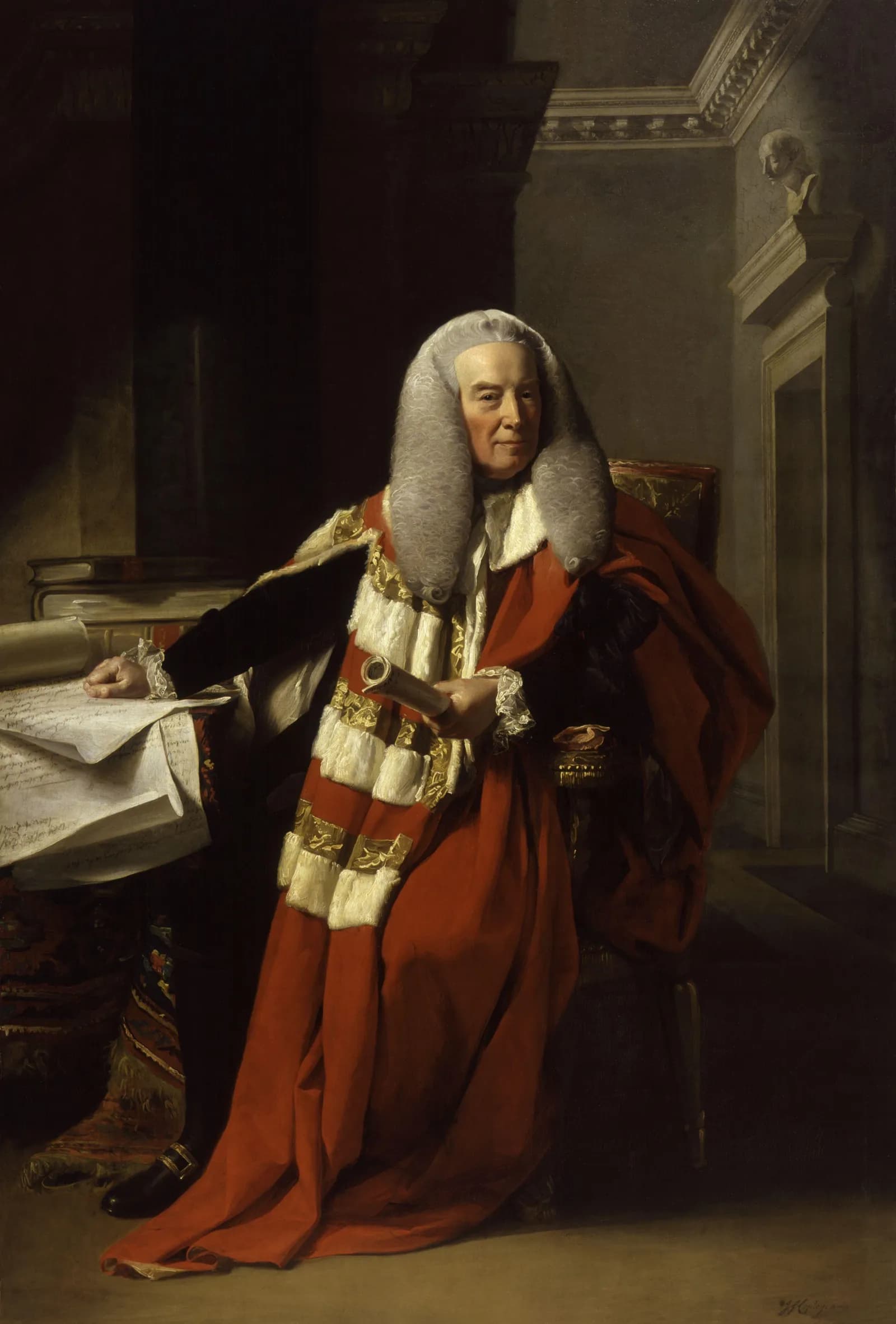
When William Murray was created Earl of Mansfield in 1776, he gave his name to one of Nottinghamshire's most historic towns. Though born in Scotland and never resident in Mansfield, the title permanently linked his legacy to this market town, creating a connection that would ripple through legal history, abolitionist movements, and English literature.
Murray was born on 2 March 1705 at Scone Palace in Perthshire. After studying at Westminster School and Christ Church, Oxford, he was called to the Bar at Lincoln's Inn in 1730. His legal career advanced swiftly; he became Solicitor General in 1742, Attorney General in 1754, and was appointed Lord Chief Justice of the King's Bench on 8 November 1756. That same year, he was created Baron Mansfield in the County of Nottingham. Twenty years later, in 1776, he was elevated to Earl of Mansfield, also in the County of Nottingham, thereby attaching his name and title to Mansfield town.
The Somerset Case: Slavery Under English Law
On 22 June 1772, Lord Mansfield delivered a judgment that would transform Britain's relationship with slavery. The case of Somerset v Stewart concerned James Somerset, an enslaved African who had been purchased by customs official Charles Stewart in Boston, Massachusetts in 1769 and brought to England. After escaping in October 1771 and subsequently recaptured, Somerset was imprisoned aboard the ship Ann and Mary, bound for Jamaica.
Somerset's legal team, led by Francis Hargrave and James Mansfield, applied for a writ of habeas corpus. The hearings stretched from February to May 1772. In his judgment, Lord Mansfield declared: "The state of slavery is of such a nature that it is incapable of being introduced on any reasons, moral or political; but only by positive law... it is so odious that nothing can be suffered to support it but positive law. Whatever inconveniences, therefore, may follow from the decision, I cannot say this case is allowed or approved by the law of England; and therefore the black must be discharged."
The ruling established that slavery had no basis in English common law and had never been established by positive law in England. While it did not immediately abolish slavery throughout the British Empire, the decision inspired the abolitionist movement and influenced similar rulings in Massachusetts between 1781 and 1783. Mansfield later clarified in 1785 that his determinations went no further than establishing that masters could not compel enslaved people to leave the kingdom by force.
Dido Belle and Life at Kenwood
The Somerset judgment may have been influenced by Murray's complex family circumstances. In 1754, he purchased Kenwood House in Hampstead for £4,000 and commissioned architect Robert Adam to remodel it. Among those raised at Kenwood were his two great-nieces: Lady Elizabeth Murray, born in 1760, and Dido Elizabeth Belle.
Dido Belle was born in June 1761 in the British West Indies. Her mother, Maria Belle, was an enslaved African woman of approximately fourteen years old. Her father was Sir John Lindsay, Murray's nephew and a Royal Navy officer. Dido arrived at Kenwood in 1766 at age five, following her mother's death. She was baptised that November at St George's Church in Bloomsbury.
At Kenwood, Dido managed the dairy and poultry yards and acted as Lord Mansfield's amanuensis in his later years. Her presence was unusual for the era; the 1778 portrait by David Martin depicting Dido and Lady Elizabeth Murray as near equals remains unique in 18th-century British art. Former Massachusetts Governor Thomas Hutchinson recorded that a slave-owner visiting Kenwood remarked bitterly that "Lord Mansfield keeps a Black in his house which governs him."
Lord Mansfield's 1793 will provided Dido with £500 outright and a £100 annuity. Unlike Lady Elizabeth, whom he referred to as his niece, Dido was identified simply by name. Dido married John Davinière in December 1793 and had three children before her death in London in July 1804.
The Literary Connection: Mansfield Park
Lord Mansfield died on 20 March 1793 at Kenwood House and was buried in Westminster Abbey. Twenty-one years after his death, Jane Austen published Mansfield Park, her third novel, in 1814. The title is widely believed to reference the Earl's title and family connections to the Austen family.
The novel addresses slavery directly; Sir Thomas Bertram, the patriarch, owns a sugar plantation in Antigua. Austen's choice of title, published forty-two years after the Somerset case, suggests the continuing resonance of Lord Mansfield's legal legacy and the slavery question in English society.
Mansfield's Legacy Today
Though William Murray never lived in Mansfield town, the 1776 creation of the Earldom of Mansfield in the County of Nottingham permanently wove his name into local history. His 1772 judgment in Somerset v Stewart marked a pivotal moment in the abolition of slavery, while his raising of Dido Belle at Kenwood House demonstrated complex attitudes toward race and family in Georgian England. The connection to Jane Austen adds a literary dimension to this legal and social legacy.
The Earl of Mansfield's story reminds us that local names often carry national and international significance; Mansfield's connection to the abolition of slavery and to one of English literature's greatest novelists endures more than two centuries after his death.